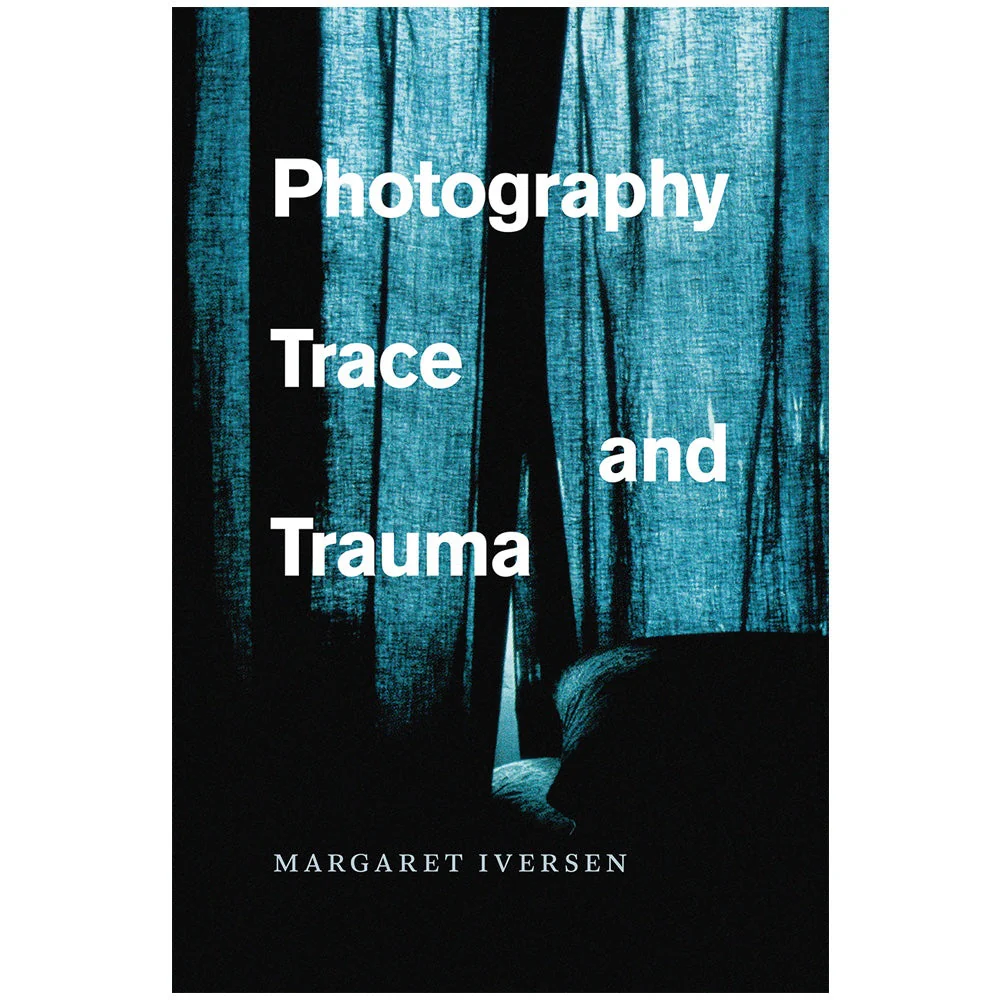
Margaret Iversen: Photography, Trace, and Trauma
Photography is often associated with the psychic effects of trauma: the automatic nature of the process, wide-open camera lens, and light-sensitive film record chance details unnoticed by the photographer—similar to what happens when a traumatic event bypasses consciousness and lodges deeply in the unconscious mind. Photography, Trace, and Trauma takes a groundbreaking look at photographic art and works in other media that explore this important analogy.
Examining photography and film, molds, rubbings, and more, Margaret Iversen considers how these artistic processes can be understood as presenting or simulating a residue, trace, or “index” of a traumatic event. These approaches, which involve close physical contact or the short-circuiting of artistic agency, are favored by artists who wish to convey the disorienting effect and elusive character of trauma. Informing the work of a number of contemporary artists—including Tacita Dean, Jasper Johns, Mary Kelly, Gabriel Orozco, and Gerhard Richter—the concept of the trace is shown to be vital for any account of the aesthetics of trauma; it has left an indelible mark on the history of photography and art as a whole.
Product Information
Product Information
Shipping & Returns
Shipping & Returns
Description
Photography is often associated with the psychic effects of trauma: the automatic nature of the process, wide-open camera lens, and light-sensitive film record chance details unnoticed by the photographer—similar to what happens when a traumatic event bypasses consciousness and lodges deeply in the unconscious mind. Photography, Trace, and Trauma takes a groundbreaking look at photographic art and works in other media that explore this important analogy.
Examining photography and film, molds, rubbings, and more, Margaret Iversen considers how these artistic processes can be understood as presenting or simulating a residue, trace, or “index” of a traumatic event. These approaches, which involve close physical contact or the short-circuiting of artistic agency, are favored by artists who wish to convey the disorienting effect and elusive character of trauma. Informing the work of a number of contemporary artists—including Tacita Dean, Jasper Johns, Mary Kelly, Gabriel Orozco, and Gerhard Richter—the concept of the trace is shown to be vital for any account of the aesthetics of trauma; it has left an indelible mark on the history of photography and art as a whole.